

Table of Contents
- Key Takeaways
- Why are NYC small businesses high-priority targets for hackers in 2026?
- What are the top cybersecurity trends threatening NYC firms this year?
- How can a phishing attack bankrupt a small online business?
- What are the legal requirements for data protection in New York?
- How does Cyber Insurance shield a business from ransomware?
- What is "Social Engineering" coverage and why is it essential?
- Can small firms afford modern cybersecurity and insurance?
- Frequently Asked Questions (FAQs)
- Conclusion
- Are you ready to build your digital shield?
Running a small business in New York City is exciting, but in 2026, it is also a bit risky. Digital crooks are everywhere. They do not just go after big banks anymore; they target “the little guy” too. If you sell things online or use email, you need to know what is happening. This guide shows you the big problems and how insurance can act like a suit of armor for your business.
Key Takeaways
- The Big Threat: Almost half of NYC small businesses have been attacked this year.
- The Cost: One big mistake can cost $200,000 in bills and fines.
- The Law: New York laws say you must have certain security steps in place.
- The Shield: Cyber insurance pays for the experts who fix things when they break.
Why are NYC small businesses high-priority targets for hackers in 2026?
Hackers like small businesses because they have good info but less security. Imagine a small clothing store in Manhattan. They have hundreds of credit card numbers, but they do not have a giant team of IT experts like a big bank does. In 2026, hackers use “robots” (AI) to check thousands of small businesses at the same time. They are looking for one easy way in, such as a weak password.
What are the top cybersecurity trends threatening NYC firms this year?
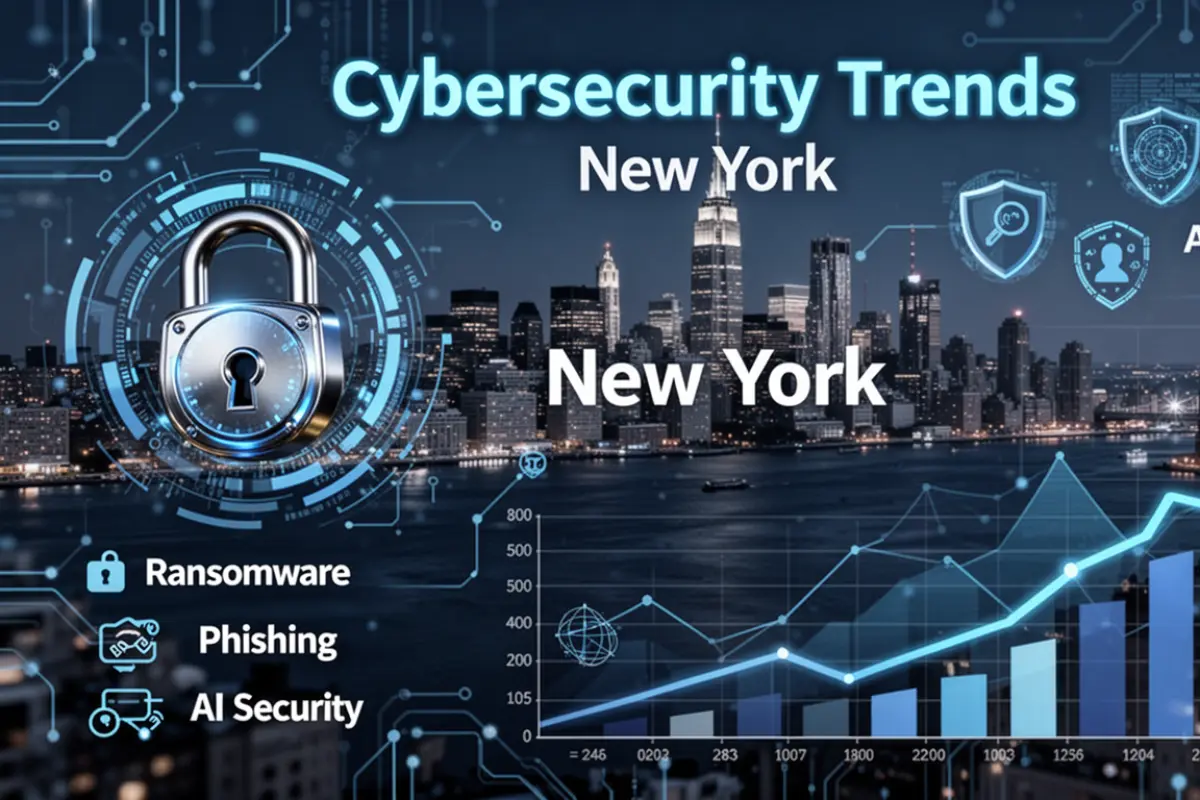
The biggest threats are fake emails and “kidnapped” data. Hackers now use AI to make emails look 100% real. They can even make a voice or video that looks like your boss! Another trend is “Ransomware 5.0.” This is when hackers lock your files and say they will tell everyone your secrets unless you pay them a lot of money.
How can a phishing attack bankrupt a small online business?
A phishing attack can ruin a business by stealing its cash. Let’s look at a “what if” story. A worker at a design shop gets a call. It sounds exactly like the owner. The “owner” says, “Quick! Send $50,000 to this new partner!” The worker does it. Later, they find out it was a fake AI voice. The bank will not give the money back because the worker “clicked send.” Without insurance to pay that $50,000 back, the shop cannot pay its rent or workers.
| Threat Type | How it Works | Example |
| Phishing | Fake emails or calls | Getting a “fake” boss to ask for money. |
| Ransomware | Locking your files | A virus that freezes your computers. |
| Data Breach | Stealing secrets | A hacker taking your customers’ emails. |
What are the legal requirements for data protection in New York?
New York has strict rules called the SHIELD Act and NYDFS Part 500. These laws say you must use “two-factor” login, where you get a code on your phone. You also need a written plan for what to do if you get hacked. If you do not follow these rules, the city can fine you $2,500 every single day. Also, your insurance company might not help you if you did not follow the rules first.
How does Cyber Insurance shield a business from ransomware?
Cyber insurance is like an emergency call for your computer. Imagine a doctor’s office in Brooklyn gets a virus that locks all their patient files. The hacker wants a huge payment to unlock them. Insurance pays for “digital detectives” to find the problem. It pays for lawyers to tell the patients. It even pays for a person to talk to the hackers and get your data back safely.
What is “Social Engineering” coverage and why is it essential?
This is a special part of insurance. It covers you when you are tricked into giving money away. Most regular insurance says, “If you sent the money, it is your fault.” But “Social Engineering” coverage understands that hackers are very good at lying. Since AI can now copy voices, this coverage is a must-have for any NYC boss who pays bills online.
Can small firms afford modern cybersecurity and insurance?
Yes! Insurance is much cheaper than paying $200,000 for a hack. Many NYC businesses now get their IT help and their insurance at the same time to save money. If you use strong passwords and test your “backup” files every few months, you can get a better price. It is better to pay a little bit now than to lose everything later.
Frequently Asked Questions (FAQs)
Do I really need cyber insurance if I am just a one-person business?
Yes. Hackers often target solo workers because they know you do not have an IT team. One phishing scam can drain your entire business bank account.
Does my general business insurance cover cyber attacks?
Usually, no. Most general policies only cover physical damage, like a fire. You need a specific “Cyber Liability” plan to cover digital risks.
What is the first thing I should do to protect my business today?
Turn on Multi-Factor Authentication (MFA) on every account you have. It is the cheapest and most effective way to stop 80% of attacks.
How much does cyber insurance cost for a small NYC firm?
Prices vary, but most small firms pay between $500 and $2,000 per year, depending on how much data they handle and their security levels.
Conclusion
In 2026, cybersecurity is not just for tech companies; it is for every business in New York City. From the boutiques of Soho to the clinics of Brooklyn, everyone is at risk. But you do not have to face these threats alone. By combining smart security steps with a strong insurance plan, you can protect what you have built.
Are you ready to build your digital shield?
At MKR Specialty Insurance, we help NYC small businesses find the perfect cyber coverage. We know the local laws and the latest threats. Let us help you find a plan that fits your budget and your needs. Contact MKR Specialty Insurance today for a free quote and sleep better knowing your business is safe.
