


Table of Contents
- Key Takeaways
- What is the main difference between Builder’s Risk and General Liability?
- Why does New York's "Scaffold Law" make General Liability so vital?
- What specific events does Builder’s Risk insurance cover?
- Hypothetical Example:
- Does a standard General Liability policy cover building damage?
- How do these policies work together to satisfy NYC lenders?
- What are the typical costs for these construction policies in 2026?
- Is your New York project fully protected from both property damage and the Scaffold Law?
Key Takeaways
- Builder’s Risk pays to repair the building itself after events like a fire, theft, or storm.
- General Liability Insurance pays for legal defense and settlements if a third party sues for injuries or property damage.
- New York’s Scaffold Law creates a high-risk legal environment, making specific “Labor Law” liability coverage essential.
- NYC Lenders typically require both policies before releasing construction funds to protect their investment.
Building a new structure in New York City is a high-stakes venture. You must manage massive cranes, heavy steel beams, and a constant flow of personnel. In a dense environment like NYC, risks are everywhere. A fire could break out, or a pedestrian could be injured by falling debris. Because these risks are so different, you need two distinct types of insurance to stay safe: Builder’s Risk and General Liability.
What is the main difference between Builder’s Risk and General Liability?
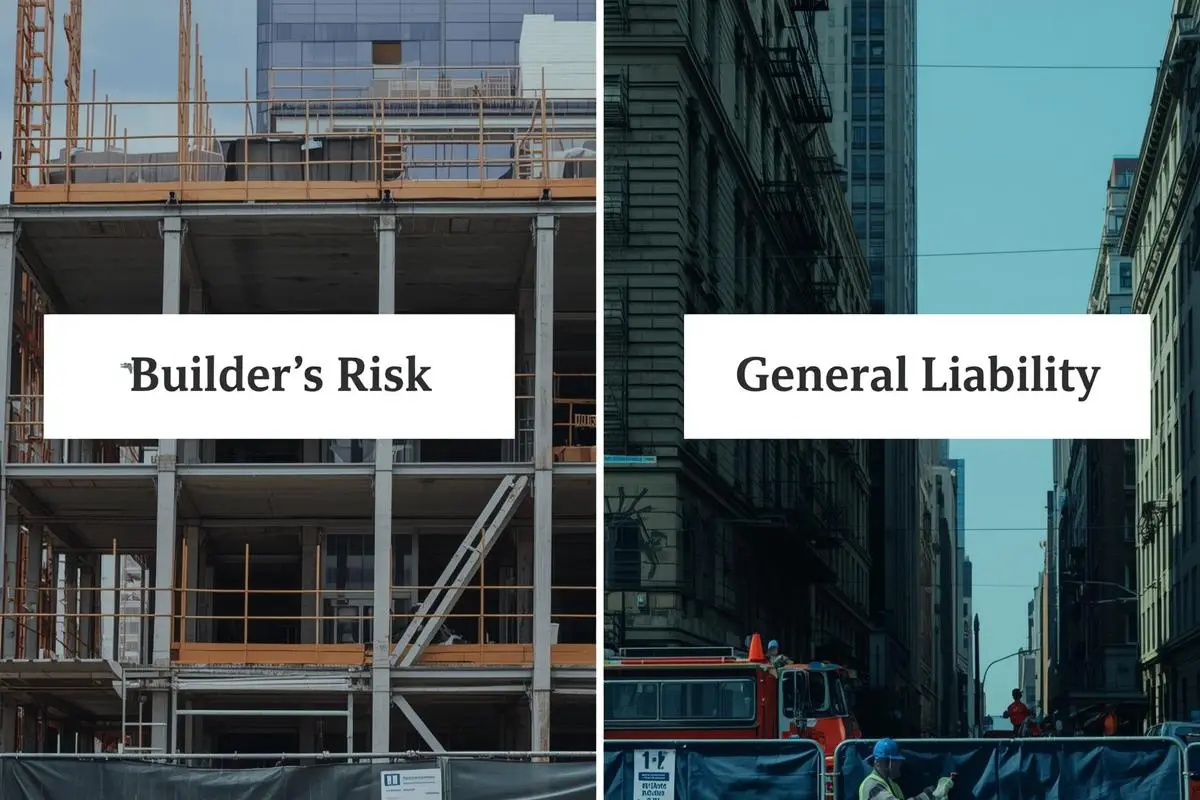
The main difference is that Builder’s Risk protects the physical building, while General Liability protects your finances from lawsuits. One policy pays to fix the property, and the other pays for lawyers if someone claims you caused them harm.
Consider the distinction:
- Builder’s Risk: This is “first-party” insurance. If a fire damages your unfinished structure, the insurance company provides funds to repair the damage.
- General Liability: This is “third-party” insurance. If a piece of debris damages a neighbor’s vehicle, they will likely sue. The insurance company handles the claim so you do not have to pay out of pocket.
In the crowded streets of Manhattan or Brooklyn, projects operate in close proximity to the public. Maintaining both policies is the only way to ensure that a single accident does not bankrupt your business.
Why does New York’s “Scaffold Law” make General Liability so vital?
New York has a unique regulation known as the “Scaffold Law” (Labor Law 240). It dictates that if a worker falls from an elevated height, the building owner and the contractor are almost always held responsible for the resulting costs. Regardless of whether the worker was at fault, the law places the burden of liability on the company in charge.
This regulation is a primary reason why liability insurance is so expensive in New York. If a worker is injured, medical bills and legal settlements can easily reach millions of dollars. In 2026, insurance premiums for small businesses in New York are expected to rise by approximately 13%. Without a robust General Liability policy that specifically includes “Labor Law” coverage, one accident could end a developer’s career.
What specific events does Builder’s Risk insurance cover?
Builder’s Risk covers physical damage to your project while it is under construction. This includes perils such as fire, theft, windstorms, and vandalism. It also covers “soft costs.” These are additional expenses incurred if a disaster delays your progress, such as extra interest on a construction loan or the costs associated with renewing building permits.
Hypothetical Example:
A developer is constructing a new apartment complex and has just taken delivery of $50,000 worth of high-end appliances. Overnight, a thief breaks into the secured site and steals the entire shipment. Because the developer has a Builder’s Risk policy, the insurance carrier pays to replace the appliances. This allows the project to stay on schedule without the developer suffering a massive financial loss.
Does a standard General Liability policy cover building damage?
No. A common misconception is that General Liability provides universal coverage for all site damage. However, most liability policies include an “exclusion for your own work”. This means the insurer will assist if you damage a neighbor’s property, but they will not pay to fix mistakes made on your own project.
If your crew accidentally causes a structural failure within your project, a General Liability policy will not pay for the repairs. You need Builder’s Risk to cover that specific damage. Relying on only one type of insurance leaves your project dangerously exposed.
How do these policies work together to satisfy NYC lenders?
Lenders and banks want to ensure their financial interest is protected. They recognize that a fire or a major lawsuit could prevent a project from reaching completion. Consequently, most NYC banks will not release construction funds unless the developer carries both Builder’s Risk and General Liability insurance.
Before funding begins, the bank will require a “Certificate of Insurance” to verify coverage. They want assurance that if a storm destroys the structure, the insurance will cover the cost to rebuild. They also need to know that a lawsuit will not drain the cash reserves needed to finish the construction. By requiring both, the lender secures the path to project completion.
What are the typical costs for these construction policies in 2026?
In 2026, General Liability for a small contractor in New York averages about $298 per month. Builder’s Risk costs are generally calculated based on the total value of the project, often ranging between 1% and 4% of the total construction cost.
| Insurance Type | Average Cost (NYC 2026) | Primary Protection |
| General Liability | ~$298 per month | Legal defense and third-party claims |
| Builder’s Risk | 1% – 4% of project value | Physical building and materials |
| Workers’ Comp | ~$193 per month | Employee medical and wage benefits |
Insurance is a significant portion of any construction budget. In New York, it can account for as much as 10% of total project expenditures. To secure better rates, developers should demonstrate a strong safety record and utilize site technology, such as monitoring cameras, to mitigate risks.
Is your New York project fully protected from both property damage and the Scaffold Law?
At MKR Specialty Insurance, we understand the unique pressure of building in the five boroughs. We specialize in helping NYC developers find the right balance of Builder’s Risk and General Liability to keep their projects moving and their lenders happy. Don’t wait for an accident to find out you have a gap in your coverage. Contact MKR Specialty Insurance today for a comprehensive review of your construction insurance program.
