

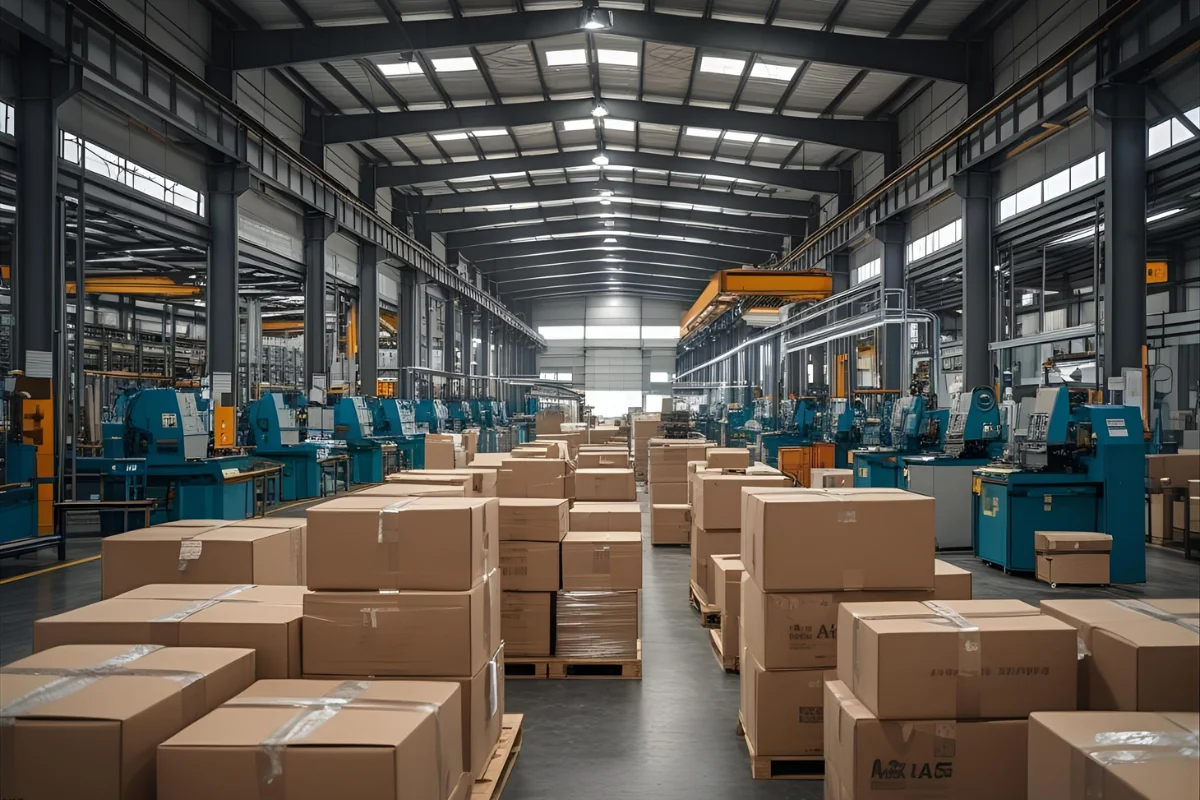
The manufacturing sector in New York is a powerful engine of the state’s economy, contributing significantly to its GDP and employing hundreds of thousands of individuals. From advanced manufacturing hubs in New York City pioneering 3D printing and robotics to traditional industries like food and fashion manufacturing in Queens and Long Island, innovation and precision are at the heart of every operation. However, the complex machinery, vast inventories, intricate supply chains, and inherent risks of producing goods demand a specialized approach to insurance. Standard commercial insurance policies often provide only a superficial layer of protection, leaving manufacturing businesses vulnerable to devastating financial losses.
At MKR Specialty Insurance, located in New York, we deeply understand the multifaceted landscape of the manufacturing industry. We specialize in crafting comprehensive, tailored insurance solutions designed to protect your assets, ensure continuity, and mitigate the unique liabilities inherent in bringing products to market. This article will delve into four critical areas where specialized insurance is absolutely indispensable for manufacturing businesses: comprehensive property protection, vital equipment breakdown coverage, robust product liability, and crucial supply chain risk mitigation.
- Safeguarding Your Factory Floor: Comprehensive Property Insurance
- Common Questions:
- The Heartbeat of Production: Equipment Breakdown Insurance
- Common Questions:
- From Factory to Consumer: Robust Product Liability Insurance
- Common Questions:
- The Interconnected World: Navigating Supply Chain Risks
- Common Questions:
- Partnering with MKR Specialty Insurance
Safeguarding Your Factory Floor: Comprehensive Property Insurance
A manufacturing facility is a significant capital investment, housing specialized machinery, raw materials, work-in-progress, and finished goods. A single event, like a fire or a natural disaster, can wipe out years of investment and halt production indefinitely.
What does it cover? Commercial Property Insurance for manufacturers goes beyond a basic building and contents policy. It’s designed to protect the physical structures of your factory, warehouses, and offices, along with all the critical equipment and inventory within. This includes:
- Buildings and Structures: Protection against damage from perils such as fire, lightning, windstorm, hail, vandalism, and burst pipes.
- Manufacturing Machinery and Equipment: Covers your production lines, CNC machines, presses, robotic systems, assembly equipment, and other specialized tools. Ensuring these items are valued at replacement cost (not just depreciated actual cash value) is crucial for quick recovery.
- Inventory: Protects raw materials, components, goods in various stages of production (work-in-progress), and finished products stored on-site or in owned warehouses.
- Furniture, Fixtures, and Office Equipment: Standard office assets within your facility.
Why is it important for manufacturers? Manufacturers often have unique structural elements (e.g., specialized ventilation systems, heavy-duty flooring for machinery) and operate with materials that may pose higher fire risks, making a generic policy insufficient. According to industry data, burglary and theft account for 54% of all business insurance claims, while water damage from burst pipes is the second most common, highlighting common property vulnerabilities for all businesses, including manufacturers.
Common Questions:
- “Does our property insurance cover our goods if they’re damaged during shipment?” Generally, no. Standard property insurance primarily covers items at a fixed location. For goods in transit, you would need Inland Marine coverage (see “Supply Chain Risks”).
- “What about contamination to raw materials?” While property insurance might cover direct physical damage, contamination that renders raw materials or finished products unusable often requires specialized Contamination and Product Recall insurance.
The Heartbeat of Production: Equipment Breakdown Insurance
Manufacturing relies heavily on complex machinery and interconnected systems. When a critical piece of equipment fails, the entire production line can grind to a halt, leading to costly downtime, missed deadlines, and lost revenue.
What does it cover? Equipment Breakdown Insurance (sometimes called Boiler & Machinery) is a specialized coverage that protects against financial losses due to sudden and accidental breakdown of equipment, often caused by mechanical or electrical failures that are not covered by standard property insurance. It typically covers:
- Repair or Replacement Costs: Of damaged machinery and equipment. This can include motors, electrical systems, pressure equipment, refrigeration, and computer-controlled machinery.
- Business Interruption: Covers the lost income and ongoing expenses resulting from the shutdown caused by the breakdown.
- Spoilage: Protects against loss of raw materials, work-in-progress, or finished goods that spoil due to a breakdown of temperature control or other critical systems.
- Extra Expenses: Costs incurred to minimize downtime, such as temporary equipment rental or expedited repairs.
Why is it important for manufacturers? Manufacturing processes are highly dependent on continuous operation. Common causes of equipment breakdown include mechanical failures, electrical failures (e.g., power surges), hydraulic failures, and pneumatic breakdowns, often stemming from lack of maintenance, component wear, or even human error. Losing a key machine can have cascading effects throughout your operation.
Common Questions:
- “Isn’t this covered by my property insurance?” No. Property insurance typically covers damage from external perils (like fire or storm). Equipment Breakdown covers internal failures (like a motor burning out or a circuit board shorting) that are sudden and accidental.
- “Does this cover equipment that just wears out?” Generally, no. It covers sudden, accidental breakdowns, not gradual wear and tear or maintenance issues.
From Factory to Consumer: Robust Product Liability Insurance
Every product that leaves your manufacturing facility carries an inherent risk – the potential to cause injury or property damage to a consumer. A defect in design, manufacturing, or even insufficient warnings can lead to devastating lawsuits.
What does it cover? Product Liability Insurance is absolutely critical for any manufacturer. It protects your business against claims alleging bodily injury or property damage caused by a defective product you manufactured, sold, or distributed. This includes:
- Legal Defense Costs: Even if the claim is baseless, defending against a product liability lawsuit can be incredibly expensive.
- Settlements and Judgments: Financial payouts awarded to the claimant.
- Damages: Covers compensatory damages (medical expenses, lost wages, pain and suffering) and, in some cases, punitive damages.
Why is it important for manufacturers? Product liability claims are a significant concern. While settlement amounts vary widely, the average personal injury jury award for product liability claims was over $7.6 million in 2018, according to the Insurance Information Institute. Even without a jury award, the cost of defending against product liability claims increased from $645,190 in 2017 to $861,155 in 2018. Major incidents, like widespread recalls, can result in multi-billion dollar payouts.
Common Questions:
- “What’s the difference between General Liability and Product Liability?” General Liability covers incidents arising from your general business operations or premises (e.g., a visitor slipping and falling in your lobby). Product Liability specifically covers harm caused by your product after it has left your control.
- “What if we recall a product due to a potential defect?” Product Liability covers the harm caused by the product. The costs of the recall itself (e.g., notification, shipping, disposal, brand rehabilitation) are typically covered by a separate Product Recall Expense or Contamination policy.
The Interconnected World: Navigating Supply Chain Risks
Modern manufacturing relies on complex global supply chains. A disruption at any point – from raw material sourcing to distribution – can have a ripple effect, impacting production, delivery, and ultimately, your profitability.
What does it cover? While not a single policy, mitigating supply chain risks involves a combination of coverages:
- Contingent Business Interruption (CBI): This is a crucial extension of Business Interruption insurance. It covers lost income and extra expenses if your operations are halted or slowed due to direct physical damage at a key supplier’s or customer’s premises, which prevents them from providing you with materials or purchasing your finished goods.
- Supply Chain Disruption Coverage: More specialized policies can cover losses due to non-physical damage events like port closures, political instability, or even certain cyberattacks affecting a critical supply chain partner.
- Inland Marine (Cargo) Insurance: As mentioned, this covers your raw materials, components, and finished products while they are in transit by land, air, or sea, or while stored temporarily off-site.
- Trade Credit Insurance: Protects against losses if a key customer or debtor becomes insolvent and cannot pay for goods received.
Why is it important for manufacturers? Supply chain disruptions are a persistent and significant challenge. A 2025 survey reported that 94% of companies experienced revenue impact due to supply chain disruptions, with the average cost of a disruption being $1.5 million per day, impacting manufacturing by approximately $0.61 million per day. These disruptions have been linked to 60% of recent inflation. Factors like labor shortages, raw material deficits, increased prices, and climate change are constantly impacting supply chain fluidity.
Common Questions:
- “Does standard Business Interruption cover supply chain issues?” Only if the disruption is caused by direct physical damage to your property from a covered peril. CBI extends this to key suppliers or customers.
- “What about cyberattacks on our logistics partners?” Standard BII and CBI might not cover non-physical damage. Specialized Cyber Liability insurance with supply chain extensions is needed for this.
Partnering with MKR Specialty Insurance
The manufacturing industry in New York is constantly evolving, embracing new technologies and processes. This dynamism demands an insurance partner who understands the unique risks inherent in transforming raw materials into finished products. From protecting your valuable machinery and property, to safeguarding against the devastating impact of equipment breakdowns and product liability claims, and building resilience against supply chain disruptions, comprehensive, tailored insurance is not just a cost; it’s an investment in your future. At MKR Specialty Insurance, located in New York, we pride ourselves on our deep expertise in serving the manufacturing sector. Contact us today for a comprehensive consultation, and let us help you protect your production line, ensuring your business continues to power forward, securely insured.
